


Healthcare stands at a turning point. For decades, we operated with one-on-one contact between a healthcare provider and a patient. The possibilities of digital healthcare opened new doors to reach and support people. But the implementation of digital healthcare also taught us a crucial lesson: not all patients are the same.
Healthcare is not an Excel spreadsheet.
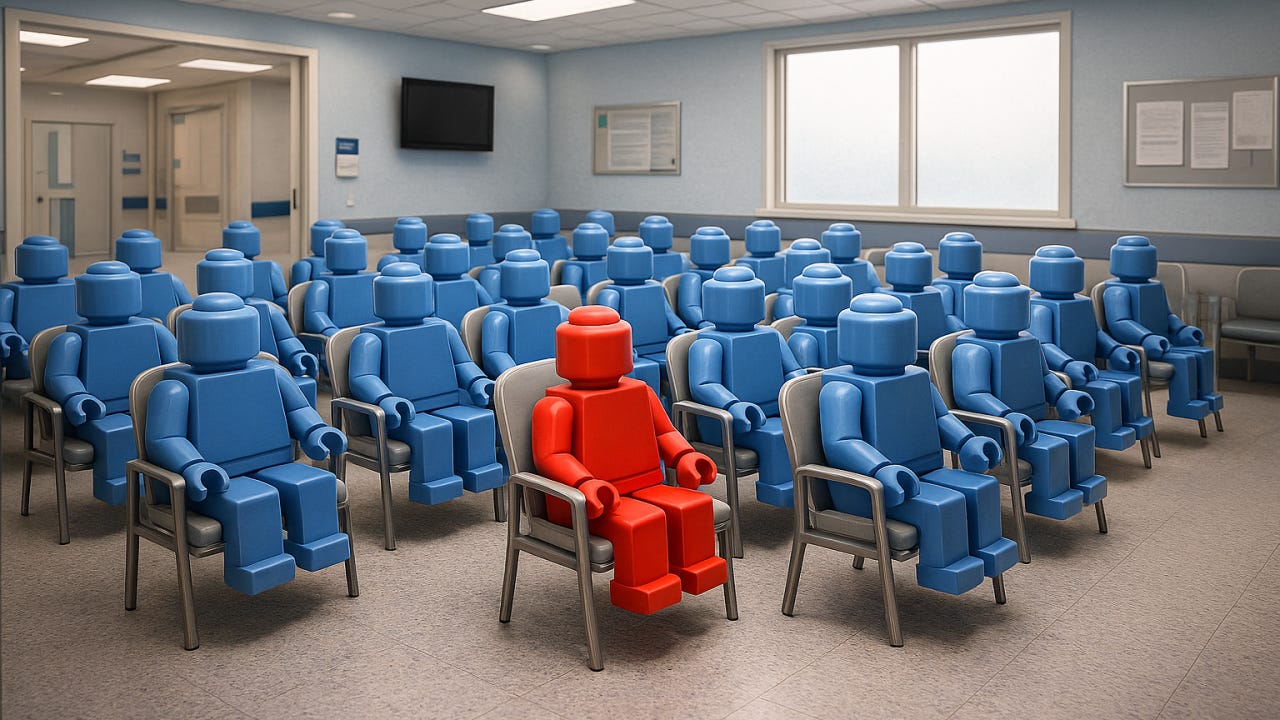
The way we communicate with patients has evolved rapidly in recent years, and at BeterDichtbij we’re at the forefront of this change. We’re now witnessing a new movement: from broad mass communication (everyone gets the same brochure, the same care pathway), through targeted persona approaches (based on demographic characteristics and generic preferences), to genuine personalization. Tailored communication that aligns with the needs and understanding of individual patients.
The Era of Mass Communication
In the early years of digital healthcare, we kept things simple. Everyone received the same information, in the same way. General awareness campaigns (such as about hay fever season), standard information leaflets in waiting rooms. Later: identical emails and app notifications for all users. This one-size-fits-all approach made sense. With limited resources, you want to reach as many people as possible. And scale is crucial to making digital healthcare work—we know that.
But despite all efforts to make this uniform communication as good as possible, the gap with one-on-one contact remained large. You often see it in practice: A 75-year-old cardiac patient has different needs than a 28-year-old woman with gestational diabetes. They come from different contexts and communicate differently. They live differently. The generic message therefore often lacks relevance for them. This sometimes leads to lower engagement and possibly worse outcomes. The question is whether a generic message adequately reaches everyone and has the desired effect.
The Rise of Personas
Then came the next step. A nice improvement: working with personas. Healthcare organizations stopped lumping everyone together. They began, like successful digital services in other sectors, to define target groups based on several common characteristics. “Linda, 55 years old, overworked, prediabetic, little time for exercise.” Or “Ahmed, 32 years old, asthma, athletic, tech-savvy.” These semi-fictional profiles helped teams provide more targeted information, or at least take into account the generic preferences of such groups.
Personas bring structure and empathy to the design process, as far as possible. They force healthcare providers, developers, and administrators to think about how to approach different user groups. About their motivations, barriers, and preferences. Apps can now sometimes offer different flows per care pathway. Or deliver (almost) personalized content based on age and condition. This approach worked to some extent: engagement increased, therapy adherence improved, and patients appreciated the attention.
Yet a fundamental limitation remained: enormous diversity exists even within a persona. Two 55-year-old women with diabetes can lead completely different lives. Have different habits and values. Need different support. But both still have to submit their measurements at a fixed time. In the same way, in the same interface.
The Transition to True Personalization
If you look closely, you can see the contours of a new phase: genuine personalization at the individual level. Continuous data analysis, medical language models, and adaptive technologies make this possible. We can finally respond to the unique needs of each individual. And this goes far beyond inserting a first name (or last name) in the salutation of an email.
Modern digital platforms learn from individual behavior. A patient consistently measures their blood sugar after breakfast but forgets on weekends? The system anticipates this with targeted reminders on Saturday morning. Someone responds better to visual information than text? The interface and texts adapt. Motivation declining? The app switches interventions. Or ensures that, at the right moment, a human healthcare provider makes personal contact.
This personalization is made possible, in my view, by three forces:
Learning algorithms: They recognize patterns in individual behavior. They predict what someone needs. Often before the person realizes it themselves. This doesn’t require knowledge of the person themselves or their characteristics, but can be based on use of (for example) interfaces, language, and responses.
Adaptive interfaces: Technology that adapts to individual preferences, skills, and context. An older user automatically gets larger text and simpler navigation. A younger user opts for more data and control. A slider for one person, a text field for another—but leading to the same value in the underlying systems.
Contextual intelligence: The system understands not only who you are, but also where you are and what you’re doing. What your situation is at that moment, and what approach you prefer. Advice and interventions adapt to the moment and context.
Digital Healthcare as a Pioneer
Digital healthcare lends itself perfectly to this form of personalization. For example, in patient support through smart messaging: in the future, a digital colleague can respond much more to your wishes as a patient, without taking more time. Providing personal attention, almost like a real healthcare provider. Something that feels like a personalized app that learns from individual patterns and makes the difference between success and dropout.
Prevention also offers opportunities. No more generic lifestyle advice, but recommendations that fit the patient’s specific risk profile. Their preferences and life stage. A personalized prevention plan takes into account someone’s work, family situation, and personal goals. That enormously increases the chance of success.
The Future: True Hybrid Care
The ultimate form of personalization combines the best of both worlds. Digital solutions that adapt to you, learn from you and what you prefer. A simple interface where you have a conversation, a platform that asks how you’re doing and advises you. And engages your healthcare provider when needed.
It’s not about human versus machine. It’s about smart collaboration.
Digital and human care. Technology takes over routine tasks, provides continuous monitoring. And delivers personalized support. Healthcare professionals thus gain more time for deep, human connection. Where it’s truly needed. It’s not about human versus machine. It’s about smart collaboration.
Conclusion
Health is perhaps the most personal thing there is. Each individual has a unique profile, their own social context. Forcing that into overly generic processes and programs—into a sort of Excel reality—creates not engagement, but dropout. Effective digital healthcare must connect with what makes people unique and therefore human.
We can now combine the benefits of one-on-one care with the efficiency of digital solutions. With the power and scale of smart, digital solutions. That’s the opportunity of the next phase in healthcare innovation: care that truly revolves around you. As a unique person. Not as a representative of a target group or persona.
From personas to persons is more than just a marketing gimmick. It’s the future of digital healthcare. Let’s work together to ensure that healthcare realizes this soon.